Hospital Discharge to Home in Gurgaon (2026): Medical Equipment & Safety Checklist
Bringing a loved one home after surgery, illness or an ICU stay? Find out which home-care devices to discuss with the discharge team, how to prepare your room, and what to check before renting equipment in Gurgaon.

From Hospital to Home: Why Early Equipment Planning Matters
A hospital discharge can feel like a relief, but the first days at home require practical preparation. A person recovering from a major operation may need a safe way to get out of bed. An older adult with limited mobility may need a wheelchair or bedside commode. Someone prescribed home oxygen may need a concentrator installed and demonstrated before arrival.
This 2026 hospital discharge equipment checklist for Gurgaon is designed for families preparing a home-care room in Gurugram, including Sector 47, Sohna Road, DLF, Sushant Lok, Sector 56 and surrounding areas. It is an equipment-planning guide—not a substitute for medical discharge instructions.
Important: The treating hospital team should decide whether discharge home is medically appropriate and which equipment, medicines, monitoring and clinical support are required. Oxygen, ventilators, BiPAP, suction equipment and invasive-care devices must not be selected or adjusted without professional direction.
1. Eight Questions to Ask Before Leaving the Hospital
Before choosing any device, ask the discharge doctor or nurse to explain the patient's needs clearly. Keep a written plan that the family and caregiver can refer to.
- Is discharge home safe, and what is the intended level of nursing or caregiver supervision?
- What equipment is required immediately, and what is only optional?
- Can the patient stand, walk, transfer to a chair or use the toilet safely?
- Are oxygen or respiratory devices prescribed? What exact settings, interfaces and backup arrangements are ordered?
- How will medication changes, wound care, diet and activity limits be managed?
- Who will demonstrate equipment use to the patient and caregiver?
- What warning signs require a call to the care team or emergency services?
- When are follow-up appointments, rehabilitation sessions and tests scheduled?
Reliable discharge planning guidance from MedlinePlus and AHRQ also emphasizes medicines, warning signs, appointments and the equipment patients need at home.
2. Medical Equipment to Discuss for Home Recovery in Gurgaon
There is no universal post-discharge package. The right equipment depends on the patient’s condition, mobility, clinical orders and home environment. These are common categories to review with the healthcare team.
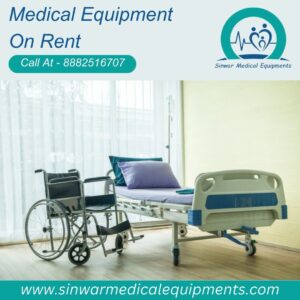
Adjustable Hospital Bed
May make positioning, transfers and caregiver assistance easier where a standard bed is unsuitable. Compare manual and electric functions; ask about size, mattress compatibility and rails.
Explore hospital beds on rent →Wheelchair & Mobility Aids
Useful when a patient cannot safely walk longer distances. Check seat width, brakes, footrests, indoor door clearance and transfer requirements.
View wheelchair rentals →Oxygen Concentrator
Required only for patients with prescribed oxygen therapy. The clinician must specify the device capacity, delivery method and settings; arrange an appropriate backup plan.
Compare oxygen concentrators →Air Mattress & Bed Support
A pressure-redistribution surface may be considered for patients with limited movement following a skin-risk assessment. It does not replace repositioning and skin care.
See air mattress options →Commode / Shower Chair
May reduce unnecessary walking for a person who has difficulty accessing the bathroom. The team should assess balance, transfer ability and bathroom safety.
Explore shower chairs →Clinical Monitoring & Support
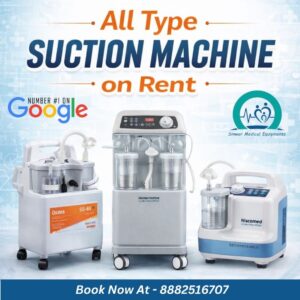
Patient monitors, suction devices, CPAP/BiPAP or ventilators are condition-specific. Obtain a clear prescription, training plan and escalation pathway when recommended.
Learn about home ICU equipment →3. Quick Decision Table: What Might Be Needed?
| Home-care situation | Equipment to discuss | Key safety check |
|---|---|---|
| Reduced mobility after surgery | Walker, wheelchair, bedside commode | Clinician-approved transfer and weight-bearing plan |
| Prolonged bed rest / high dependence | Adjustable bed, appropriate mattress | Skin assessment, safe transfers, bedrail risk review |
| Prescribed oxygen therapy | 5L or 10L concentrator as prescribed | Clinical prescription, setup training, power backup plan |
| Complex respiratory / critical-care needs | BiPAP, suction, monitor or ventilator if ordered | Trained clinicians, escalation and maintenance plan |
| Difficulty bathing or using toilet | Shower chair or commode | Bathroom layout, falls-risk and caregiver assessment |
For devices available from Sinwar Medical Equipments, start with the medical equipment rental homepage or speak with the team about the exact model and availability.
4. Prepare the Home Before the Patient Arrives
Equipment is only one part of a safe discharge. Review the home’s layout and accessibility before arranging delivery.
- Choose an accessible room with enough space to approach both sides of the bed where clinically necessary.
- Keep walkways free of loose rugs, clutter and trailing cables; provide reliable night lighting.
- Check door widths, lift dimensions and the route from building entrance to the patient's room.
- Arrange a safe place for a wheelchair or commode and a practical route to the bathroom.
- Confirm a suitable electrical supply for prescribed devices and ask the provider about outage contingency planning.
- Keep medicines, discharge papers, support numbers and caregiver instructions in one accessible place.
- Confirm who is available to assist with transfers, hygiene, meals and appointments.
MedlinePlus offers an additional home preparation guide after hospitalization, including practical ways to reduce avoidable hazards.
5. A Simple Discharge-to-Home Setup Timeline
Before discharge
Obtain the written plan, identify the equipment list, confirm trained caregiver support and share the intended delivery address with the supplier.
Before patient arrival
Clear the room, complete installation and ask the technician to demonstrate safe operation, routine cleaning and basic troubleshooting.
On the first day at home
Follow the hospital’s care instructions, verify medicine schedules and emergency contacts, and ensure the patient and caregiver can access essential items safely.
During the first week
Attend follow-up appointments, review any changes in care needs and ask whether equipment or clinical supervision should be reassessed.
6. Questions to Ask Before Renting Medical Equipment
In Gurgaon, a clear rental agreement helps avoid confusion when equipment is required urgently. Ask for written confirmation of these details:
- Exact device: Make, model, functions, accessories and patient-size/weight suitability.
- Rental terms: Quoted daily/monthly amount, minimum period, refundable deposit, extension and pickup conditions.
- Delivery: Installation charge, service area, estimated slot and whether any lift or access constraints apply.
- Testing: Demonstration of operation, cleaning condition and equipment compatibility.
- Support: Whom to call for malfunction and what replacement or backup arrangements are available.
- Clinical responsibilities: Which parts require a clinician's prescription, monitoring or trained operator.
Published prices may vary by model, duration and service terms. Ask Sinwar Medical Equipments for a written quotation instead of assuming that one price covers every discharge arrangement.
7. Safety Essentials Families Should Not Overlook
Hospital bed rails and mattress fit
Bed rails are not automatically safe for everyone. Rails, frames, mattresses and accessories should be compatible, with an individualized entrapment and falls-risk review. The U.S. FDA hospital-bed guidance discusses serious entrapment risks, including in private homes. Do not use a rail as a restraint or as a substitute for necessary supervision.
Oxygen and respiratory support
Oxygen therapy is a prescribed medical treatment, not a general wellness product. Patients or caregivers should not independently choose oxygen flow, alter ventilator settings or substitute one respiratory device for another. Keep oxygen equipment away from flames and smoking, and seek a clinician-approved backup plan for power failures.
When to seek help
If the patient develops severe breathing difficulty, new confusion, chest pain, loss of consciousness or another emergency warning sign specified by the hospital, seek urgent medical care promptly. Do not rely on equipment delivery as a replacement for an emergency response.
8. Medical Equipment Rental Support in Gurgaon
Families across Gurugram may need a different mix of mobility, respiratory and bedside equipment when a relative returns home. Sinwar Medical Equipments lists hospital beds, wheelchairs, oxygen concentrators, air mattresses and additional clinical equipment on its website.
When requesting a quote, mention the patient's discharge date, Gurgaon locality, relevant doctor-prescribed equipment, room access and preferred rental period. This helps the supplier identify suitable options without making assumptions about the patient’s care.
Frequently Asked Questions
1. What medical equipment is commonly needed after hospital discharge?
Depending on the discharge plan, a patient may require a hospital bed, walker, wheelchair, commode, pressure-redistribution mattress or prescribed oxygen equipment. Many patients need none of these. The hospital team should determine what is appropriate.
2. Can I rent a hospital bed in Gurgaon for short-term recovery?
Sinwar Medical Equipments lists hospital beds on rent in Gurgaon. Ask the provider about the available functions, minimum rental period, security deposit, delivery and collection terms before booking.
3. Which is better after discharge: a manual or electric hospital bed?
It depends on the patient's positioning needs, caregiver capacity, room layout and clinical recommendations. Electric beds can make some adjustments easier, while manual models may suit different budgets and situations. Confirm mattress and rail compatibility.
4. Is oxygen equipment necessary for every patient after surgery?
No. Home oxygen is only appropriate when prescribed for a medical reason. The treating clinician must determine oxygen need, delivery system and settings. Do not rent a concentrator simply as a precaution without medical advice.
5. Do families need a nurse to use a home patient monitor?
Any need for clinical monitoring and interpretation should be determined by the healthcare team. A monitor alone does not replace a qualified professional or an emergency care plan. Complex and critical-care equipment may require trained staff.
6. How soon should medical equipment arrive before discharge?
Whenever feasible, complete delivery and setup before the patient arrives home. Timing depends on the hospital plan, supplier stock, building access and locality. Confirm the delivery window directly with the supplier.
7. What should I check when a rented hospital bed is delivered?
Verify the correct model, stable assembly, controls, mattress fit, brakes, rail risk assessment and safe operation. Ask for a demonstration and whom to contact for faults. Any side-rail decision should be individualized.
8. Is renting medical equipment cheaper than buying it?
Renting may be more economical for a limited recovery period, but the total cost depends on the rental duration, deposit, delivery fees and available models. Compare a written quote with the ownership cost for long-term needs.
9. Where is Sinwar Medical Equipments located in Gurugram?
Its official contact page lists 716, 7th Floor, ILD Trade Centre, near Subhash Chowk, Sector 47, Gurugram, Haryana 122018. You can call +91 88825 16707 or +91 92053 09707 to discuss equipment availability.
Need Medical Equipment for a Planned Discharge in Gurgaon?
Share the hospital's equipment prescription or written discharge requirements and request a suitable rental quote from Sinwar Medical Equipments.
Office: 716, 7th Floor, ILD Trade Centre, Near Subhash Chowk, Sector 47, Gurugram, Haryana 122018
Email: sinwarmedicalequipments@gmail.com
Website: sinwarmedicalequipments.com
Medical information & safety references
- MedlinePlus – Leaving the hospital: your discharge plan
- MedlinePlus – Getting your home ready after the hospital
- AHRQ – IDEAL Discharge Planning
- FDA – Hospital beds and bedrail safety resources
Information updated October 29, 2026. Educational guidance only; clinical decisions belong to the treating team.