Why Medical Equipment Rental Is Better Than Buying – Complete Guide for Smart Healthcare Decisions in Gurgaon
- Table of Contents
Introduction: The Growing Need for Medical Equipment at Home
Understanding Medical Equipment Rental
Why Buying Medical Equipment Seems Attractive (But Isn’t Always Practical)
Cost Comparison: Renting vs Buying
Short-Term Medical Needs – Rental Is the Smart Choice
Maintenance & Repair Responsibility
Technology Upgrades & Obsolescence
Storage Problems After Recovery
Emergency Situations – Faster Solution
ICU Setup at Home – Why Rental Makes More Sense
Financial Flexibility & Cash Flow Advantage
Hygiene & Sanitization Standards
Environmental & Practical Benefits
Who Should Consider Renting Instead of Buying?
When Buying May Make Sense
10 Frequently Asked Questions (Client Point of View)
Final Expert Advice
Introduction: The Growing Need for Medical Equipment at Home
With rising hospital costs and increased awareness about home healthcare, more families are choosing recovery at home.
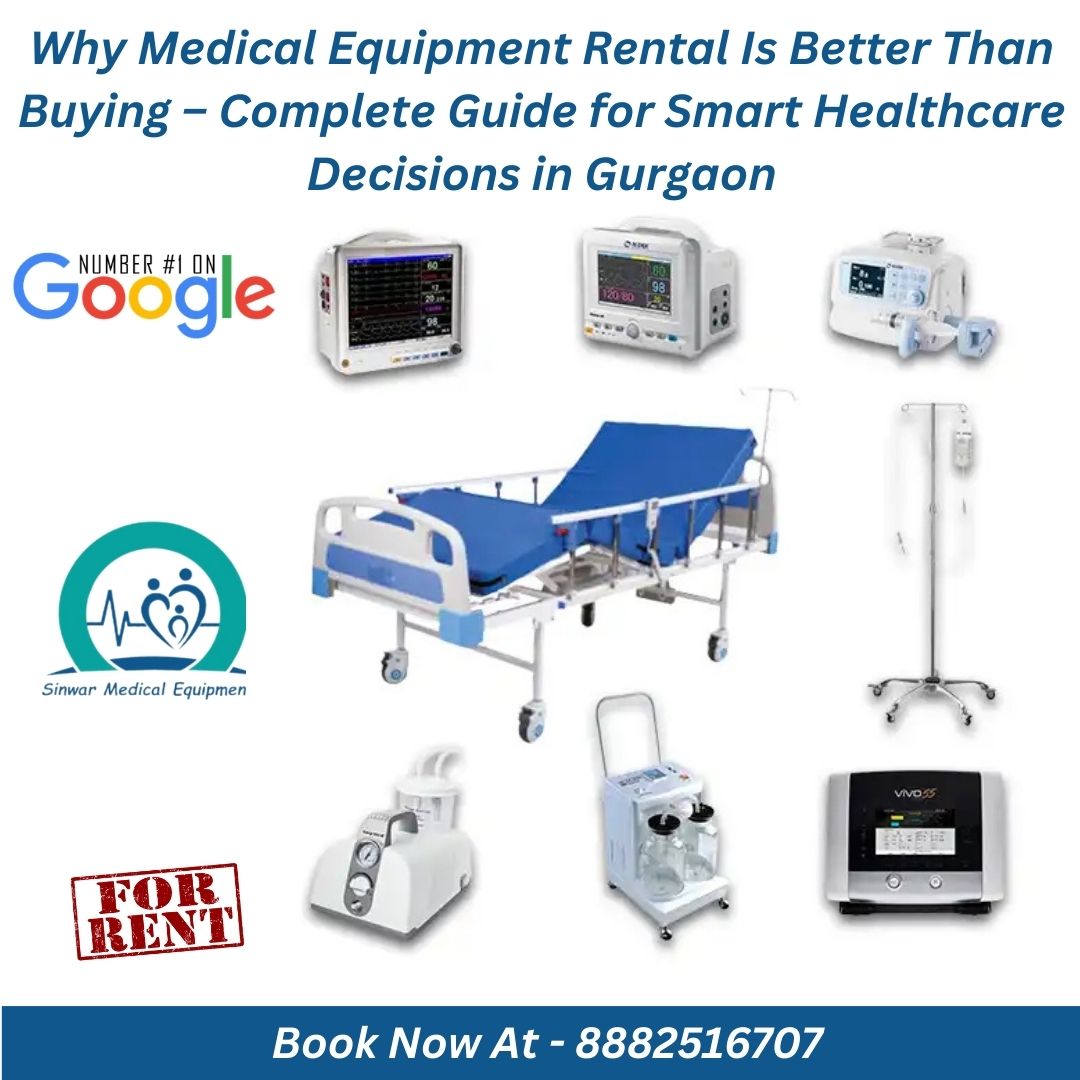
Common equipment required includes:
Hospital bed
Oxygen concentrator
BiPAP/CPAP machine
Wheelchair
Walker
Suction machine
Cardiac monitor
Air mattress
Infusion pump
These devices are often required temporarily — for weeks or months — not permanently.
That is where rental becomes practical.
What Is Medical Equipment Rental?
Medical equipment rental means you use professionally maintained medical devices for a fixed period by paying a monthly or weekly rental charge.
You receive:
Delivery
Installation
Usage training
Maintenance support
Replacement if needed
Without investing large money in ownership.
Why Buying Medical Equipment Feels Like a Good Idea
Some families think buying is better because:
It feels permanent
“We own it” mentality
Concern about hygiene
Fear of rental breakdown
However, after analyzing real cases, most buyers realize:
Equipment was needed only for 1–3 months
Machines require maintenance
Resale value is low
Technology becomes outdated
Buying often leads to unnecessary expense.
Cost Comparison: Renting vs Buying
Let’s understand with a practical example.
Example: Oxygen Concentrator
Buying cost: High one-time investment
Rental cost: Small monthly payment
If patient needs oxygen for 2 months:
Rental = Affordable
Buying = Expensive + Storage problem later
Example: Hospital Bed
Buying = High upfront cost
Rental = Pay only for duration required
For temporary recovery, rental saves 50% to 80% cost.
Short-Term Medical Needs – Rental Is Smart
Most medical conditions requiring equipment are:
Post-surgery recovery
Fracture recovery
Temporary respiratory illness
Elderly temporary weakness
Home ICU transition
Duration: 1 week to 3 months
Buying equipment for short duration is financially inefficient.
Rental solves this problem.
Maintenance & Repair Responsibility
Medical machines require:
Regular servicing
Technical calibration
Filter replacement
Electrical safety checks
If you buy:
You handle maintenance.
If you rent:
Service provider handles everything.
If breakdown happens — replacement is provided quickly.
That reduces stress for families.
Technology Upgrades & Obsolescence
Medical technology evolves fast.
Machines purchased today may become outdated in a few years.
Rental allows:
Access to updated equipment
Upgrade option if patient condition changes
No worry about resale
Buying locks your money into a single device.
Storage Problem After Recovery
After patient recovery:
Where will you keep ICU bed?
Where will oxygen concentrator go?
What about suction machine?
Medical equipment takes space.
Rental allows easy pickup after recovery.
No clutter. No storage tension.
Emergency Situations – Faster Solution
In emergency:
Families need equipment within hours.
Rental providers offer:
Same day delivery
Quick installation
Immediate usage guidance
Buying involves:
Market research
Payment processing
Delivery wait
Installation delay
Rental saves critical time.
ICU Setup at Home – Rental Makes More Sense
ICU equipment includes:
ICU bed
Cardiac monitor
Oxygen system
Infusion pump
Suction machine
Ventilator
Buying complete ICU setup is extremely expensive.
Most patients need ICU support temporarily.
Rental makes advanced critical care accessible at home without hospital-level cost.
Financial Flexibility & Cash Flow Advantage
Healthcare emergencies already create financial pressure.
Large one-time investment reduces liquidity.
Rental allows:
Manageable monthly payments
Preserve savings
Avoid loans
Reduce financial burden
Smart financial planning favors rental.
Hygiene & Safety Standards
Reputed rental providers follow:
Full sanitization
Quality testing
Safety inspection
Performance verification
Professional rental equipment is cleaned and tested before every delivery.
Buying second-hand equipment from unknown sources can be risky.
Environmental & Practical Benefits
Rental supports:
Resource optimization
Less manufacturing waste
Sustainable usage
Instead of multiple unused devices stored in homes, rental promotes efficient use.
Who Should Choose Rental?
Rental is ideal for:
Post-surgery patients
Elderly care
Temporary respiratory support
Home ICU recovery
Accident recovery
Short-term chronic illness
When Buying May Make Sense
Buying may be suitable if:
Equipment required lifelong
Daily long-term usage for years
Financially comfortable with upfront cost
Even then, proper cost comparison is important.
⭐ Client Reviews
“ICU setup was arranged within hours. Machines were in perfect condition and installation was free.”
“Very professional team. Government-approved equipment and affordable rental plans.”
“Excellent service and quick support. Highly recommended medical equipment provider.”
❓ Frequently Asked Questions
Final Expert Advice – Smart Healthcare Decision
Buying medical equipment may seem like ownership security, but in real-world healthcare situations, rental provides:
Cost savings
Flexibility
Maintenance support
No storage stress
Faster emergency response
Technology upgrade access
Financial safety
For most families, especially in cities like Gurgaon where hospital costs are high, medical equipment rental is the practical, affordable, and stress-free choice.
Before making any decision, always evaluate:
Duration of need
Budget capacity
Maintenance responsibility
Space availability
Future usage
Healthcare decisions should be emotionally supportive but financially smart.
Rental allows you to focus on patient recovery — not financial burden